

What Is Cold Foam? How to Make It at Home
Cold foam is cold milk aerated into a light, velvety topping that floats on iced coffee, cold brew, tea, or matcha without warming the drink. The best cold foam is glossy and spoonable but still loose enough to pour, so it blends into each sip instead of sitting on top like whipped cream.
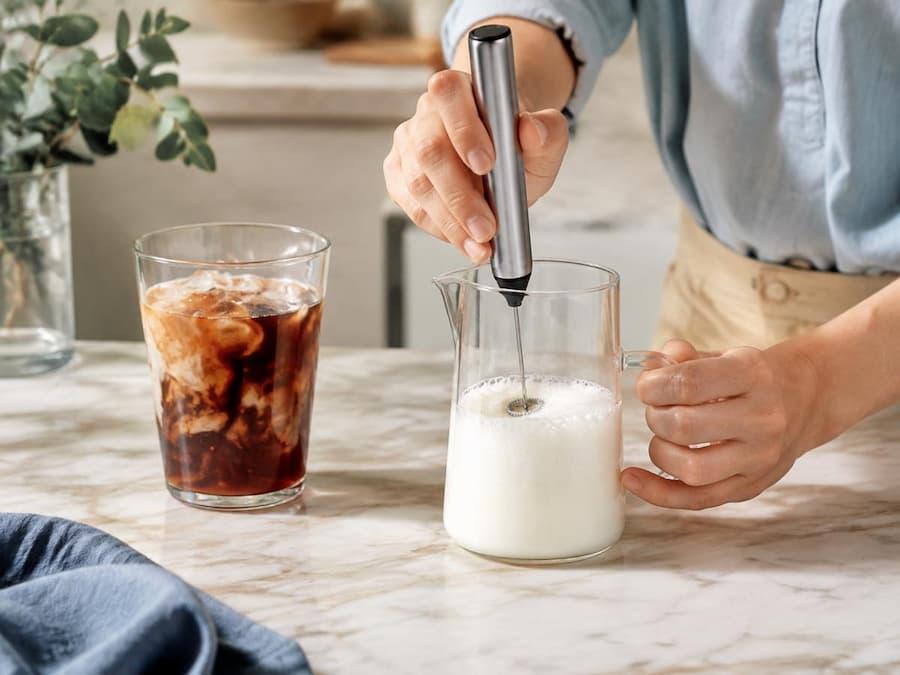
Making it at home takes about a minute. Start with very cold milk, add a little sweetener if you like, then use a handheld frother, French press, blender, or tightly sealed jar to incorporate air. The right milk depends on whether you want a high, airy cap or a richer sweet-cream finish.
What Is Cold Foam?
Cold foam is made by mechanically agitating chilled milk or a milk-and-cream mixture. That movement traps tiny bubbles inside a network formed largely by milk proteins. Because no steam is used, the topping stays cool and makes a natural partner for iced drinks.
It is related to hot milk foam and whipped cream, but it is not the same as either one.
|
Topping |
How It Is Made |
Texture |
Best Use |
|---|---|---|---|
|
Cold foam |
Cold milk is aerated without steam |
Light, glossy, and pourable |
Iced coffee, cold brew, iced espresso, matcha |
|
Steamed milk foam |
Milk is heated and aerated with steam |
Silky microfoam or a drier cap |
Lattes and cappuccinos |
|
Whipped cream |
High-fat cream is whipped much further |
Rich, stiff, and spoonable |
Desserts and indulgent drink toppings |
The difference you notice first is the way it drinks. Cold foam slowly slips into the coffee while you sip, creating a contrast between cool foam and dark coffee rather than a separate dollop to eat with a spoon.
Cold Foam Recipe: Choose Light or Rich
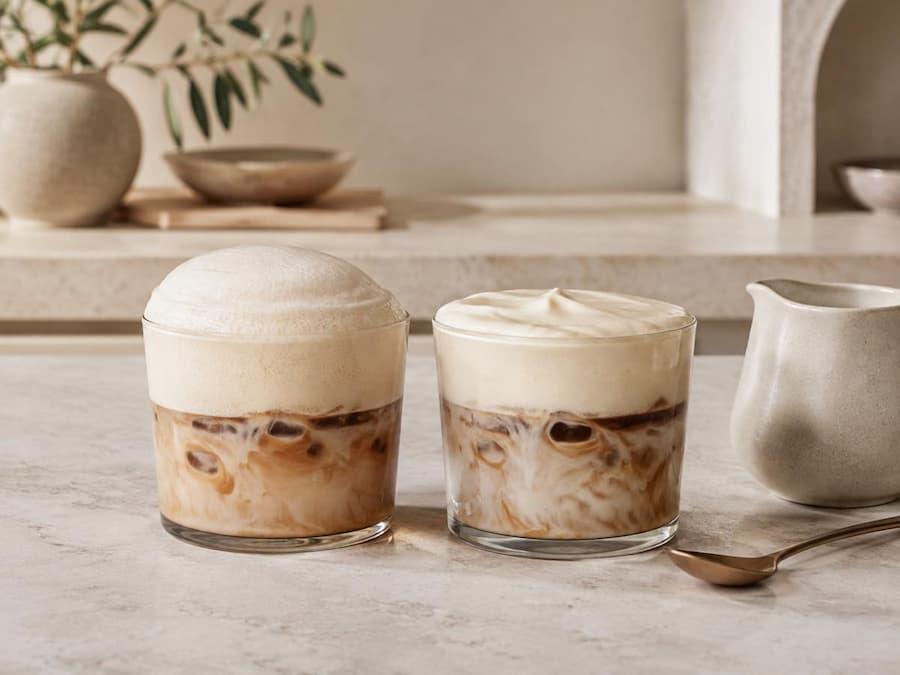
There is no single mandatory cold foam recipe. The most useful choice is between a classic milk foam with more lift and a sweet-cream foam with more body.
|
Style |
Ingredients for One Drink |
Result |
|---|---|---|
|
Classic airy cold foam |
1/4 cup (60 ml) very cold nonfat or 2% milk; 1–2 teaspoons syrup or powdered sugar, optional |
Highest volume, light texture, coffee-forward |
|
Rich sweet-cream cold foam |
2 tablespoons very cold 2% milk; 2 tablespoons very cold heavy cream; 1–2 teaspoons syrup |
Denser, creamier, more dessert-like |
For either version, use a narrow container with enough extra room for the liquid to expand. If you are new to cold foam, begin with the classic recipe: it is easier to aerate and makes the difference between cold foam and whipped cream especially clear.
Ingredients
-
Your chosen cold milk or milk-and-cream mixture
-
1–2 teaspoons simple syrup, coffee syrup, or powdered sugar, optional
-
Ice and a prepared cold drink for serving
Liquid syrup disperses easily in a cold mixture. Powdered sugar also works because it dissolves more readily than coarse granulated sugar. Flavoring is optional; plain milk can foam without it.
How to Make Cold Foam at Home
-
Chill everything. Use milk straight from the refrigerator. Prepare the iced drink first so the foam can be served as soon as it is ready.
-
Combine the ingredients. Pour the milk mixture and optional sweetener into a tall, narrow container. Do not fill it more than halfway.
-
Aerate until glossy. Froth for about 20–30 seconds with a handheld frother, or use one of the methods below. Move the frother gently near the surface as the volume grows.
-
Stop while it still pours. The foam should look smooth, hold soft peaks for a moment, and fall in a slow ribbon. If it becomes stiff or grainy, it has moved toward whipped cream.
-
Pour and serve immediately. Spoon or pour the foam over a fully chilled drink. Sip through the foam rather than stirring it in at once.
The published Starbucks at-home cold foam formula uses 1/4 cup of 2% milk with powdered sugar and vanilla extract. It is a useful benchmark, but the texture can be adjusted: nonfat milk gives more airy volume, while cream makes the result richer.
Four Ways to Froth Cold Milk
|
Tool |
Approximate Time |
How to Use It |
Typical Result |
|---|---|---|---|
|
Handheld frother |
20–30 seconds |
Keep the whisk just below the surface in a narrow cup |
Fast, fine, and easy to control |
|
French press |
30–45 seconds |
Pump the plunger briskly through the milk |
Smooth foam; useful for a larger batch |
|
Blender |
20–30 seconds |
Blend briefly, then let large bubbles settle |
Convenient for several drinks; can be coarser |
|
Mason jar |
45–60 seconds |
Fill no more than halfway, seal, and shake hard |
No special equipment; usually larger bubbles |
With a jar, leave plenty of empty space so the milk can move. With a French press, use enough liquid for the mesh to reach it. Whatever the tool, the visual endpoint matters more than the clock.
What Milk Is Best for Cold Foam?
Nonfat milk usually makes the tallest and most stable dairy cold foam because milk proteins can surround the air bubbles without as much fat getting in the way. A peer-reviewed review of milk foaming properties explains that lipids can impair foam formation and stability, especially when milk fat is partly crystalline at cooler temperatures.
That does not make cream “wrong.” Fat adds richness while reducing airy volume, which is why a milk-and-cream blend creates the soft, dense texture people associate with sweet-cream cold foam.
|
Milk Choice |
Foam Volume |
Richness |
Best For |
|---|---|---|---|
|
Nonfat dairy milk |
High |
Light |
A tall, airy cap |
|
2% dairy milk |
Medium to high |
Balanced |
Everyday cold foam |
|
Whole milk |
Lower |
Creamier |
A softer foam that blends sooner |
|
Milk plus heavy cream |
Lower |
Very rich |
Sweet-cream cold foam |
|
Barista-style oat or soy milk |
Varies |
Creamy |
Dairy-free foam with better structure |
|
Standard almond or oat milk |
Often lower |
Varies |
A lighter dairy-free result served quickly |
For plant-based cold foam, look for a carton labeled “barista” and check its frothing guidance. Added protein or stabilizers often help, but formulas vary widely, so the label is more useful than assuming every oat or almond milk will behave the same way.
How to Flavor Cold Foam
Once the plain technique works, add flavor before frothing so it disperses evenly. Start with one teaspoon per serving, taste the finished drink, and increase only if the coffee can still hold its own.
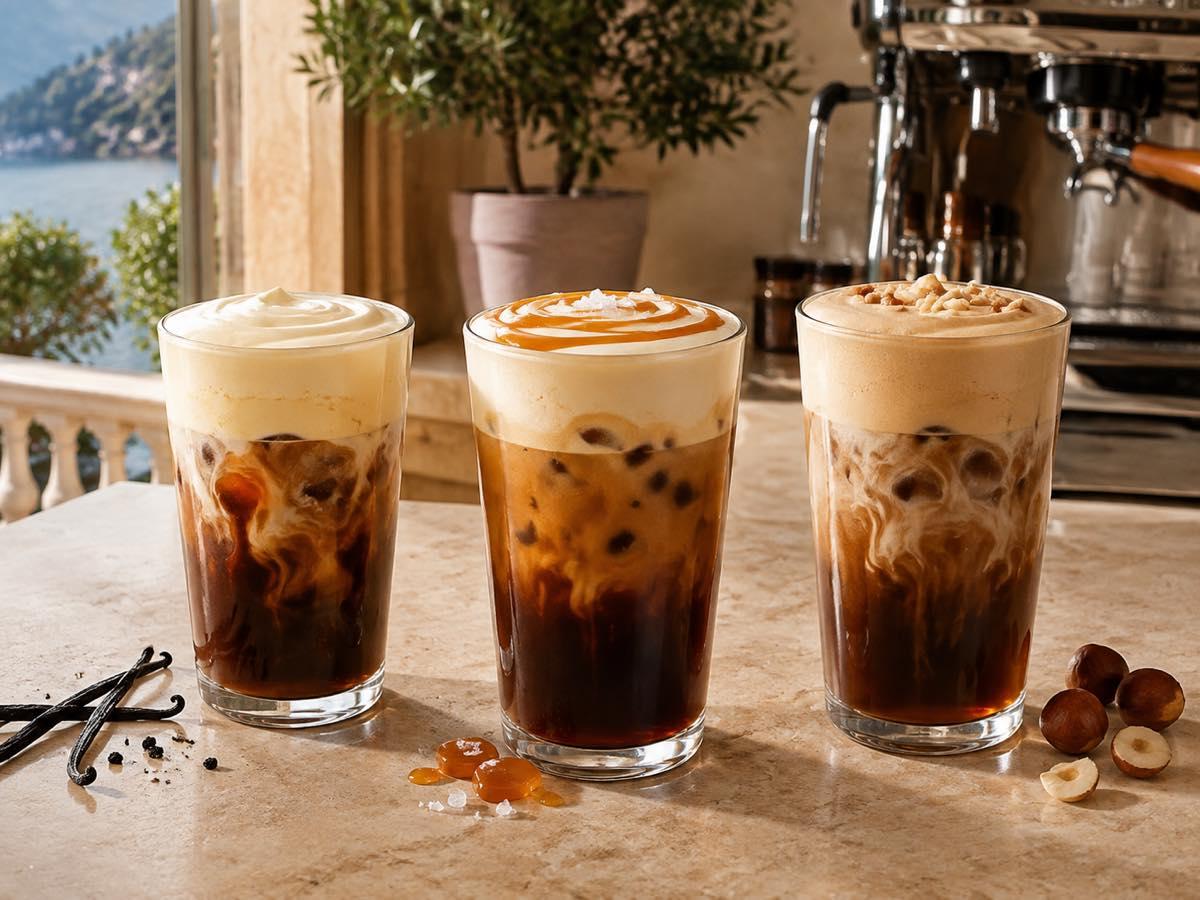
Como Speziale is an Italian-inspired syrup and lifestyle brand, and its coffee flavors work naturally here because syrup can sweeten and flavor the foam in one measured step.
Vanilla Cold Foam
Combine 1/4 cup cold nonfat or 2% milk with 1–2 teaspoons Tahitian Vanilla. Froth until glossy and pour over cold brew, iced coffee, or an iced latte. The vanilla should round the coffee rather than cover it; the published comparison of vanilla syrups for coffee explains how different vanilla styles behave beside espresso, milk, and ice.
Salted Caramel Cold Foam
For a richer topping, combine 2 tablespoons cold 2% milk, 2 tablespoons cold heavy cream, and 1 teaspoon Creamy Salted Caramel. Froth only until it pours in a slow ribbon. Pair it with unsweetened cold brew or a strong iced Americano so the caramel has enough bitterness for balance.
Toasted Hazelnut Cold Foam
Combine 1/4 cup cold 2% milk with 1 teaspoon Warm Toasted Hazelnut. This softer, nutty foam suits iced espresso and lightly sweetened iced lattes. If you are deciding how strong to make the base, what espresso is and how it changes across drinks gives the useful foundation.
Why Is My Cold Foam Not Working?
|
Problem |
Likely Cause |
Fix |
|---|---|---|
|
Foam stays thin |
Milk is warm, the container is too wide, or the tool is fully submerged |
Use refrigerator-cold milk, switch to a narrow cup, and work closer to the surface |
|
Large bubbles disappear quickly |
The jar or blender created coarse bubbles |
Let the foam rest for 10 seconds, tap the container gently, and pour right away |
|
Foam becomes stiff or grainy |
It was frothed too long, especially with cream |
Stop earlier, while the foam is glossy and pourable |
|
Foam sinks immediately |
The drink is warm or the mixture is too rich for the amount of air |
Chill the drink, reduce cream, or use 2% or nonfat milk |
|
Plant milk barely foams |
The formula has too little protein or structure |
Try a barista-style product and serve it as soon as it is frothed |
|
Flavor is too sweet |
Too much syrup was added to both drink and foam |
Flavor either the coffee or the foam first, then adjust after tasting |
Cold foam is temporary by design. Bubble size, milk composition, temperature, and the frothing method all affect how long it holds, so make it after the drink is assembled rather than preparing it far in advance.
Best Drinks to Top With Cold Foam
-
Cold brew: A classic pairing because concentrated coffee stands up to a creamy topping.
-
Iced Americano: Gives the foam a clean espresso-and-water base with plenty of contrast.
-
Iced latte: Adds a second milk texture and works especially well with vanilla or hazelnut.
-
Iced matcha: A lightly sweet foam softens matcha's vegetal bitterness.
-
Chai or black tea: Vanilla or salted caramel foam can turn a simple iced tea into a more layered drink.
Leave a little room at the top of the glass—about 1 to 1 1/2 inches is usually enough for a generous cap. Pouring the foam over the back of a spoon can make a cleaner layer for serving, but it is not required.
Make Cold Foam Your Way
The simplest cold foam starts with very cold milk and enough agitation to create fine bubbles. Choose nonfat or 2% milk for a lighter cap, add a little cream for a richer result, and stop frothing while the texture is still glossy and pourable. Once that base works, vanilla, salted caramel, or toasted hazelnut can give the foam its own identity without hiding the coffee beneath it.


Comments
No comments yet. Be the first to share your thoughts!