

What Is a Lungo? Lungo Coffee Explained
A lungo is an espresso pulled with more water through the coffee grounds, creating a longer, less concentrated cup with a lighter body and often a more bitter finish. The word lungo means “long” in Italian, so the name describes the extended extraction rather than a different bean or roast.
That single detail—where the extra water goes—also explains the difference between a lungo, an espresso, and an Americano. Espresso stops at a shorter yield, a lungo keeps the extraction running, and an Americano adds hot water only after the espresso is finished.
Lungo Meaning: Why the Name Means “Long”
Lungo is the Italian word for “long.” On a coffee menu, caffè lungo means a coffee made by lengthening the espresso extraction. It does not mean a double espresso, and it does not simply mean a large cup of coffee.
The dose of ground coffee can stay the same as a standard espresso. What changes is the yield: more water travels through the puck, so more liquid reaches the cup. Lavazza’s barista vocabulary describes the same relationship—a ristretto is pulled shorter, while a lungo is pulled longer.
This is why “long” refers to the pull, not just the serving size. A drink can be physically large without being a lungo if the extra water was added after brewing.
How Lungo Coffee Is Made
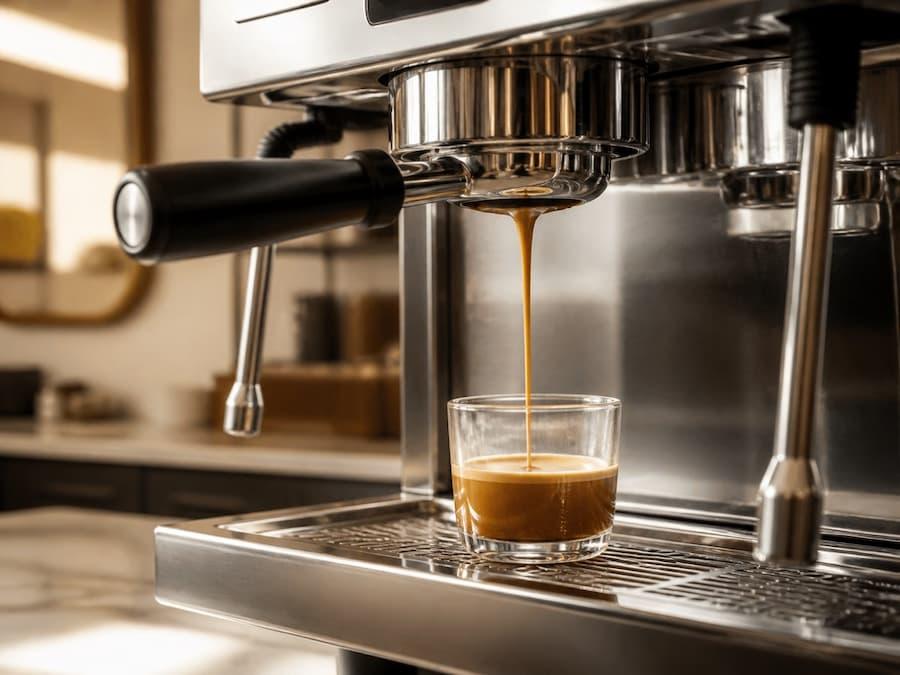
A standard espresso is commonly dialed around a 1:2 brew ratio by weight. For example, 18 grams of ground coffee might produce about 36 grams of espresso. A lungo extends that recipe toward roughly 1:3 or 1:4, so the same 18-gram dose might yield 54 to 72 grams in the cup.
Those numbers are useful starting points, not a universal law. Coffee, grinder, basket, machine, and taste all matter. Traditional descriptions often place a lungo around 50 to 70 ml, while capsule systems may use a larger preset. Nespresso, for example, defines its Original-line lungo size as 110 ml and formulates dedicated capsules for that extraction. A capsule-machine lungo should therefore not be treated as an exact technical template for every café espresso machine.
The brewing sequence is simple:
-
Use an espresso machine and a normal espresso-size dose.
-
Allow more water to pass through the puck than you would for espresso.
-
Stop at the chosen longer yield; do not add separate hot water afterward.
-
Taste, then adjust the grind or yield if the cup is thin, harsh, or overly bitter.
The method matters more than a fixed cup size. If all the beverage water passes through the coffee bed under pressure, the drink is a lungo. If a normal espresso is brewed first and then lengthened with hot water, it is an Americano.
What Does Lungo Coffee Taste Like?
Lungo coffee is less concentrated than espresso because a similar amount of coffee material is spread through more water. It usually feels lighter and less syrupy, with a thinner crema and a longer drinking experience.
The extended extraction can also pull more dry, roasty, and bitter flavors from the grounds. That does not mean every lungo must taste unpleasant. A well-dialed recipe can be aromatic and balanced, especially when the coffee and grind are suited to a longer ratio. It simply has less room for error than a standard espresso.
“Strong” is especially easy to misunderstand here:
-
Flavor intensity: Espresso usually tastes more intense because it is more concentrated.
-
Bitterness: Lungo often tastes more bitter because the extraction continues longer.
-
Caffeine: A lungo made from the same dose may extract slightly more total caffeine, but bean type, dose, and recipe can matter more than the drink name.
-
Serving size: Lungo is larger than espresso, but it is usually smaller than a typical Americano.
In other words, a lungo can taste less concentrated yet more bitter at the same time.
Lungo vs Espresso: What Changes in the Cup?
Lungo and espresso belong to the same family. They use the same basic equipment, pressure-driven brewing method, and often the same dose. The key difference is how far the extraction is allowed to run.
|
Feature |
Lungo |
Espresso |
Americano |
|---|---|---|---|
|
Basic method |
Extended espresso extraction |
Standard espresso extraction |
Espresso plus hot water after extraction |
|
Water through the puck |
More |
Standard amount |
Standard amount |
|
Common starting ratio |
About 1:3 to 1:4 |
About 1:2 |
Espresso ratio stays the same; added water varies |
|
Typical cup |
Longer than espresso |
Small and concentrated |
Usually the largest of the three |
|
Body |
Lighter, less syrupy |
Dense and concentrated |
Diluted and easy to sip |
|
Flavor tendency |
More roasty, dry, or bitter |
More concentrated and balanced when dialed well |
Espresso character softened by added water |
|
Crema |
Usually thinner |
Usually denser |
Often dispersed or thinned by added water |
|
Caffeine |
May be slightly higher from the same dose |
Baseline depends on dose and beans |
Same as the espresso used, unless extra shots are added |
The table is a guide rather than a specification sheet. Cafés and machines use different recipes, and “espresso” may mean a traditional single in one place and a modern double in another.
Extraction and Concentration
Espresso stops earlier, so its dissolved coffee compounds are concentrated in a smaller amount of water. Lungo continues toward a larger yield. More material can be extracted overall, yet the finished drink is less concentrated because its volume also increases.
Texture and Crema
Espresso generally has a denser body and more compact crema. A lungo’s crema is often paler and thinner, while the mouthfeel is lighter. Crema alone is not a quality score, however; roast, freshness, bean variety, and machine settings all affect its appearance.
Which One Works Better With Milk?
Espresso is usually the more dependable base for a cappuccino, flat white, or latte because its concentrated flavor can remain clear through milk. A lungo can work with a small mark of milk, but a large milk drink may make its already lighter body disappear.
Lungo vs Americano: Extraction vs Dilution
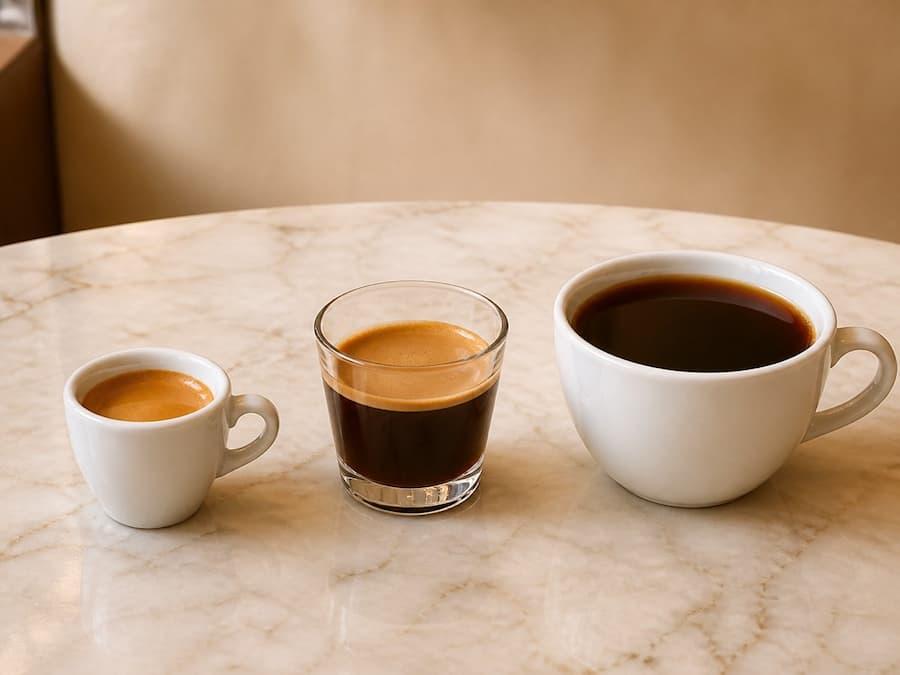
The simplest way to remember the difference is to ask one question: Did the extra water pass through the grounds, or was it added afterward?
-
In a lungo, the extra water passes through the puck during extraction.
-
In an Americano, a normal espresso is completed first, then hot water is added.
This changes flavor. A lungo reaches further into the extraction, so dry or bitter notes may become more noticeable. An Americano preserves the original espresso extraction and then lowers its concentration with clean hot water. It often tastes smoother and more familiar to someone who usually drinks a larger cup of black coffee.
The drinks can also differ in size. A café-style lungo is often a modest extended shot, while an Americano may fill a much larger cup. Because cafés choose their own recipes, size alone is not a reliable way to identify either drink.
Choose a lungo when you want a compact, longer expression of espresso and enjoy a roasty edge. Choose an Americano when you want more volume without extending the extraction through the puck.
How to Make a Lungo at Home
Use this as a starting recipe, then let taste decide where to stop.
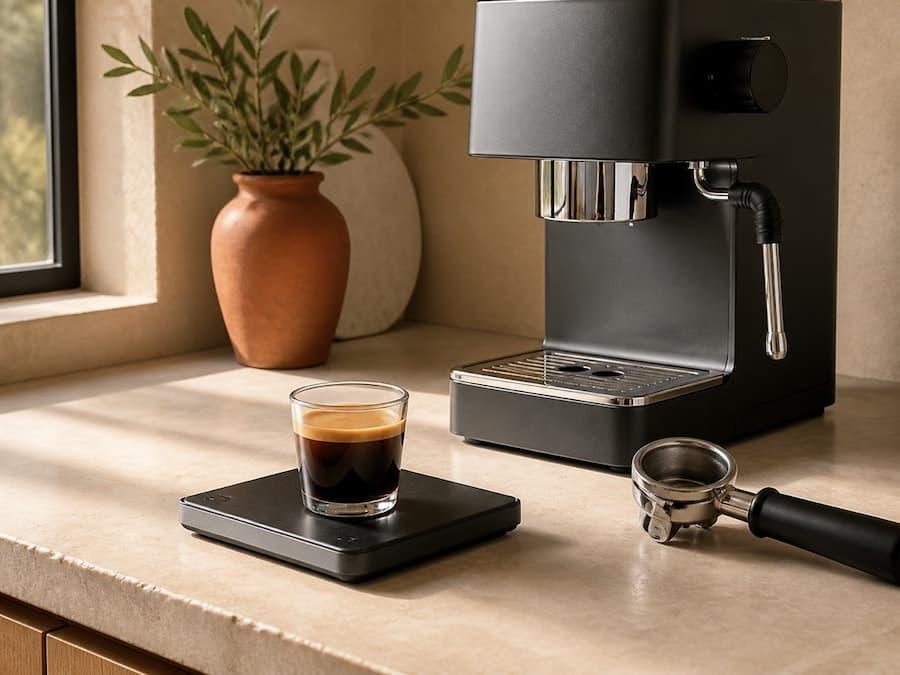
What You Need
-
Espresso machine
-
Burr grinder
-
Scale
-
18 grams of coffee, or the dose your basket is designed to hold
-
A cup large enough for the longer yield
A Practical Starting Recipe
-
Heat the machine, portafilter, and cup thoroughly.
-
Grind and prepare the puck as you would for espresso.
-
Begin with 18 grams of coffee and aim for about 54 grams in the cup, a 1:3 ratio.
-
Let the shot run longer than your normal espresso, but watch the scale and flow instead of chasing a fixed time.
-
Stir the finished lungo, let it cool briefly, and taste.
If the lungo is aggressively bitter, woody, or drying, try a slightly coarser grind or stop at a shorter yield. If it runs very quickly and tastes hollow or sharply sour, grind a little finer. Change one variable at a time.
Optional Flavoring Without Hiding the Coffee
A traditional lungo needs nothing added, but a measured flavor note can soften a roast-forward cup. Como Speziale is an Italian-inspired syrup and lifestyle brand built around coffee rituals and considered flavor.
For a vanilla lungo, stir 1 teaspoon of Tahitian Vanilla into the hot coffee, taste, and add more only if needed. The small measure rounds the edges without turning a compact black coffee into a sweet latte. If you prefer a nutty direction, the same restrained approach works with Warm Toasted Hazelnut.
Should You Choose a Lungo, Espresso, or Americano?
Choose by the drinking experience you want, not by which name sounds strongest.
-
Choose espresso for the smallest cup, the fullest body, and concentrated flavor.
-
Choose lungo for a modestly longer black coffee with a lighter body and more extraction character.
-
Choose Americano for a larger, gentler cup made by diluting a properly finished espresso.
If you are undecided, brew one espresso and one lungo from the same coffee dose, then compare them as they cool. The side-by-side tasting makes the difference in body, sweetness, bitterness, and finish much easier to recognize. Make an Americano from a third matching espresso and the role of added water becomes immediately clear.
A Longer Italian Coffee Moment
Lungo coffee is not simply a weak espresso or a small Americano. It is an espresso extraction taken farther: the same basic foundation, more water through the puck, a larger yield, a lighter body, and often a more roasty or bitter finish. Remember the sequence—espresso stops, lungo continues, Americano dilutes—and the menu becomes much easier to read.
When you want to shape that longer coffee at home, a restrained touch of Como Speziale can complement the roast while keeping the character of the lungo in focus.


Comments
No comments yet. Be the first to share your thoughts!